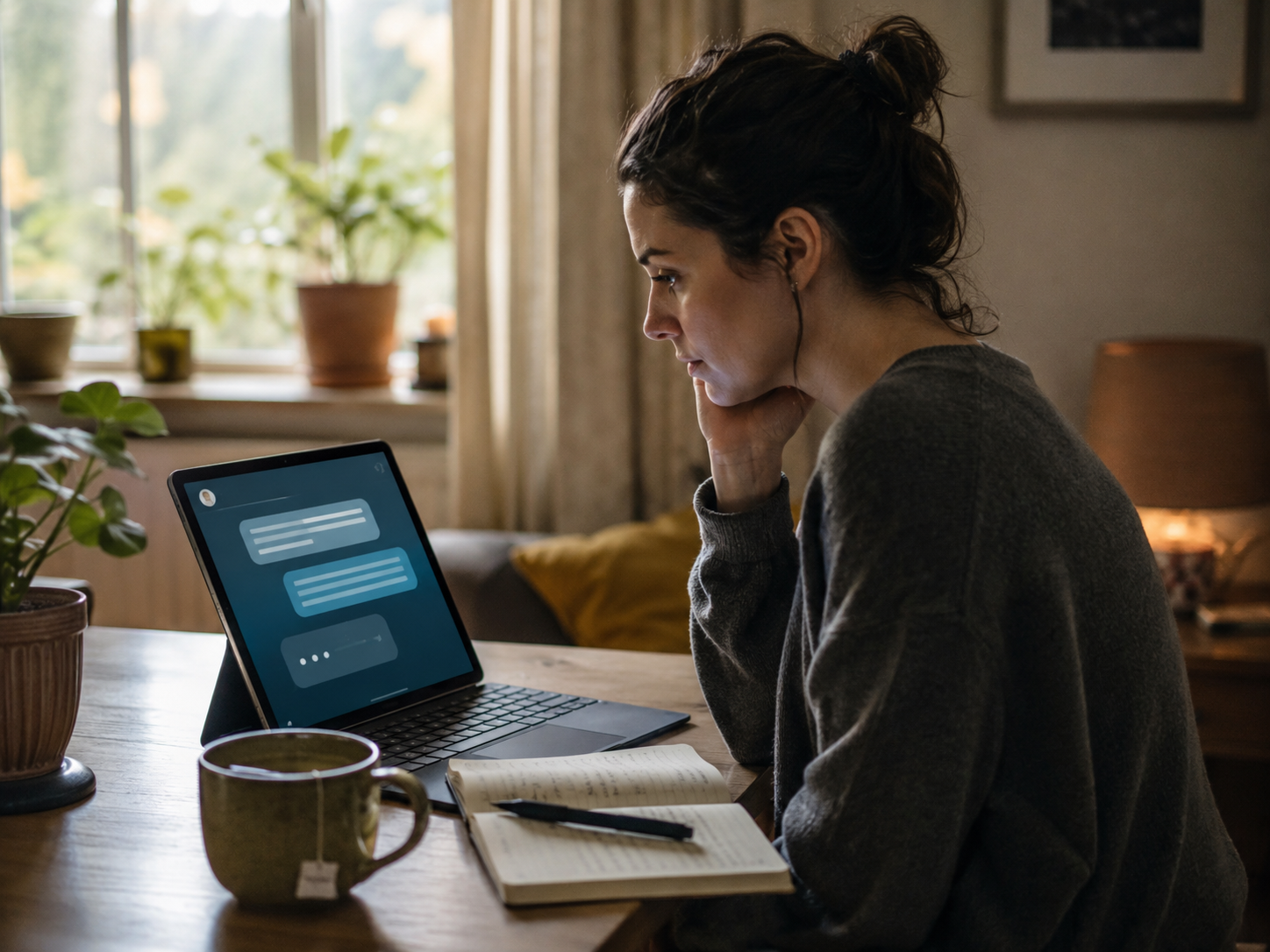
Can a Chatbot Help Us Heal?
“A 2025 U.S. study found that 13 percent of adolescents and young adults had used generative AI for mental-health advice. Among people ages 18 to 21, the figure was more than one in five. Most users returned to AI repeatedly, and nearly 93 percent said they found its advice at least somewhat helpful. These numbers do not prove that AI is an effective counselor, but they do show that many people are already treating it like one.”
McBain, Ryan K., et al. “Use of Generative AI for Mental Health Advice Among US Adolescents and Young Adults.” JAMA Network Open, 2025.
Instead of seeking help from trained and experienced experts, people now often seek advice from ChatGPT and other LMPs. Some people find this trend concerning because it eliminates the basic understanding and emotional interaction between humans. A concerning trend that not only undermines the work of experts in the mental health field but also endangers the people seeking advice from “the machine.”
The omnipresence of AI should concern us. We need to focus on the human-to-human connection that makes healing personal, authentic, and safe.